Sunday, 28 April 2013

Spring Clean


Andy wandered into the garden this week and declared it needed shrubs, it needed height, it needed something bigger than a lupin.  I recognise an invitation to go shopping when I hear one so I duly obliged.

First on the list was Sambucus Black Lace - I love the idea of the black leaves/pink flowers.  Another one on the dream list was a Magnolia - I have bought four of these in the past but they all died.  Luckily for me I went to a local wholesale nursery which has opened to the public: the Sambucus was waiting for me and the nursery man was an expert in Magnolias!

I picked Philadelphus Belle Etoile to place near the kitchen window for the gorgeous smell and Hypericum Moserianum because it reminded me of my mother's garden.


I also picked up Amelanchier lamarckii (because it was as big as a tree but the same price as its smaller siblings); Weigela Bristol Ruby (because of the pretty blossoms in the picture) and Chaenomeles Jet Trail (because I have three of these in different colours so I know I can grow them!).  Andy thought we had finished until I spotted the variegated leaves on the Pieris Flaming Silver so I couldn't leave it behind! 


It is amazing how quickly things change at this time of year.  I took this photo three days ago:

This morning the foliage seemed bushier, the tulips have opened and the Japonica is covered in frilly yellow buttons. 


You might have noticed a few plant pots have gone in the second shot - spring cleaning!


The herb patch needed weeding.


The back of the garden was definitely in need of some TLC.

The plastic thing had to go. That made room for the veg patch:

 
We now have peas and beans, potatoes, onions, carrots and garlic along side the raspberries, strawberries and gooseberries.

I still have the allotment at the moment but I'm not sure I need it now I'm organised here!

Friday, 22 March 2013

Tarka Returns to Thetford


We stood on a muddy river bank, under a dull grey sky, with the threat of snow in the air but there was a smile on every face.  The otter had found a group of photographers and was putting on a show for the cameras.


When we arrived there had been one lone photographer but no otter.  Two more guys were wandering up and down the bank and in the distance we spotted two more looking excited as an otter frolicked on the bank in front of them.  We quietly hurried across and caught a brief view as it swam away.

It was when we were returning from our walk we got the best views.  There were about fifteen photographers following this lively creature along the river as it swam and dived and ate and popped up to look at us.  Brilliant!


Otters were on the brink of extinction after their numbers fell by 95% between 1950 and 1970 but our rivers are now cleaner and the otter is a protected species so the population is rising again.  It is doing so well some fishing groups are calling for a cull!


Further down the river we found the Black-bellied Dipper.  It was first spotted by the BTO Director of Services, Andrew Scott, back in November 2012.  It has stayed in the same location ever since and has
become one of the most-recorded individual bird in the BTO BirdTrack in 2013.


On the home front I spent an hour tidying up a border yesterday and spotted all the jobs I wanted to get on with if only we didn't have a forecast for snow over the weekend!  So frustrating!  The greenhouse is in full swing though so plenty of pottering to do and a giant hole to fill in ....


All the photos by Andy Mason because I forgot to take a camera!


BARGAINS

ALDI are selling packs of vegetable plug plants for £1.99 this week - choose from tomatoes; lettuce; peppers and cauliflowers.  They are also selling fruit plants - pack of six Elsanta strawberries for £2.99 or fruit bushes in 2lt pots for the same price - redcurrant; raspberry; red or green gooseberry; blackberry; blackcurrant or blueberry.  For £4.99 there's a choice of ten ornamental trees or for £5.99 there are five different Rhododendrons in 5lt pots.

Rooko at Don't Lose the Plot tells us B&Q are selling off seed potatoes (£1.50 per bag of 25 pots).


Monday, 18 March 2013

Euro link

Remember the large hole I mentioned last post?  Well, yesterday I walked into the greenhouse to find a huge pile of earth:


Mole sprang to mind. 

Apparently there has been a mole population explosion recently. Back in 2006 Brussels restricted the sale of strychnine to the annoyance of old fashioned murderers and mole killers alike.  Since then the mole population has been steadily increasing.  The wet weather has also helped: it makes it easier for the males to tunnel through the earth in search of a mate and it meant the worms have stayed close to the surface making mealtimes easy so more young moles survived.

If it was a mole I was facing a bit of a moral dilemma ... did I want to kill the poor thing or could I live with it tunnelling under my greenhouse until the floor collapsed?  They don't like mothballs or Jeyes fluid but neither do I!   They don't like Stinking Hellebore or garlic but I have both of those growing nearby!  I couldn't possibly use a trap!

I moved a box to get a better look and discovered:


Not a mole then .... a railway tunnel!!

I still think a rat is the culprit.  We placed the outdoor camera near it last night to see what popped out but the images were far too light (the flash bounced off the glass and overexposed) so I will have to wait a few hours and try again.


  • The winner of the BTMR (British Tradional Molecatchers Register) Molecatcher of the Year Award caught 8453 moles in 2011.  The winner in 2012 caught 2146.  Forty years ago a million moles were regularly being trapped every year across Britain as most parishes employed molecatchers.
  • In 1702 King William III died after his horse stumbled on a molehill: many Jacobites toasted "the little gentleman in the black velvet waistcoat".
  • Moles do not have good eye sight, they can't hear or smell very well either but they are extremely sensitive to vibrations.

Friday, 15 March 2013

Slow, slow, quick, quick, slow ...


This time last year I was creating a path in a sunny Spring garden with seventeen frogs seranading me from the pond and a harvest mouse in residence in the greenhouse.   

A year on and things are very different ... by the 25th March 2012 my garden was bursting with blossom .... buds are just beginning to appear now but I think we are about two weeks behind last year.

The greenhouse is full of seed trays (some of which are showing signs of life at last) and when I went to check on the heater earlier this week I discovered a large mound of freshly dug earth on the floor ... a brief inspection revealed a rather large hole under the staging ... has my sweet little harvest mouse piled on the pounds?  I doubt it. I smell a rat!  Where's that cat when I need her!


Well, the grape hyacinthes, minature irises and daffodils are gracing us with their presence. 

The snowdrops and hellebores are still flowering too, as are the primulas and periwinkle.


Propagation

With Spring bulbs I have tended to plant them and leave them to mutiply by themselves but blogging has taught me a few things!  Let's begin with crocuses.  As you will probably know, they grow from corms.  Over the season the corm sends out the shoots, flowers and shrivels as the nutrients are used up.  Under the old corm a new one develops which will produce the following year's plant.  Around the edge of the new corm there are offset cormels which will also sprouts leaves in the first year and develop into full corm to flower the second year.  To assist propagation you need to dig up the plants after die back, separate the new corm to replant in the original position and plant the cormels in a nursery bed where they will grow to full size by Autumn ready to be transferred to another part of the garden.

Daffodils are easy to propagate as the bulbs divide themselves but did you know you can assist this process by scoring?  This involves lifting the bulb and making two cuts at right angles across the basal plate to a depth of about 5mm.  The bulb then needs to be kept in a warm place (about 21 degrees C) for 24 hours.  Dust with fungicide and place on a raised wire mesh or a tray of dry sand again in a warm place.  Within 3 months new bulbs will have developed on the cut surfaces.  Now you plant the parent bulb upside down so the new bulbs are just below the surface of the compost.   In March put the pot outside and the new bulbs will begin to develop while the parent bulb disintegrates so passing its nutrients to the young ones.  The new bulbs need another year before they will flower.  It sounds like a real faff but it produces 3 or 4 times more bulbs than leaving them to their own devices.

This is a good time to divide snowdrop clumps while they are still in the green.  Lift the bulbs very carefully and divide them into groups of three/four bulbs to replant around the garden.  In a couple of years these tiny clumps will have filled out ready to be divided again. 


Propagating Hellebores is a different matter as they are not grown from bulb.  I will leave you with this link which I found quite useful: http://www.hellebores.org/growing/propagating.html


This post is linked to May Dreams Garden Bloggers' Bloom Day. 

Tuesday, 26 February 2013

Caffeine

 All my clothes appear to have shrunk in the wash!  Obviously I need a new wardrobe OR a differently shaped body.  Yesterday I decided to quit moaning and actually DO something about it so the diet began.  Fresh fruit and yogurt for breakfast; egg for lunch and moussaka for dinner.  I drank plenty of water and apple juice but no tea or coffee.  By nine thirty I had the worst headache ever!  I went to bed with a couple of pills and promptly threw up!  Brilliant for the diet I suppose but NOT something I wish to repeat.  Today I had my usual caffeine fix and feel just fine.

So what is this stuff I can’t live without?

It really isn’t very pleasant stuff! Apparently tea, coffee and cocoa plants produce caffeine to act as a pesticide which paralyses and kills certain insects once they have eaten the leaves.   Scientists have found high levels of caffeine in the soil around coffee plants as it also inhibits seed germination too close to the mature plant.  Doesn’t sound like the sort of thing you want in a healthy diet!

We all know it is in tea, coffee, coke and, to a small extent, chocolate.  We know it acts as a mild stimulant to ward off drowsiness, giving us improved mental focus and co-ordination.  We know it produces these effects quite quickly and wears off within a few hours .... but is it any good for us?

Scientists have carried out numerous studies involving thousands of people and discovered no significant relationship between caffeine and cancer – in fact coffee can protect us against some cancers.  Although caffeine does raise your heart rate and blood pressure there is no risk to people with a healthy heart (but you need to be careful if you suffer from high blood pressure).  High caffeine intake can lead to an increased loss of calcium in the urine but this can be offset by adding two tablespoons of milk to each cup of coffee.  Some evidence suggests it reduces the risk of Type 2 diabetes: some asthma sufferers find caffeine relieves the attacks and a French study showed women who drink coffee had better cognitive ability in old age than non-drinkers. Because it has a modest effect on your metabolism caffeine is one of the ingedients in some weight loss pills.  It acts as a mild diuretic and it can suppress appetite but in reality the effects are very small and insignificant - I was hoping to find a different conclusion here - a tea/coffee/chocolate diet sounds quite nice!
Not all bad then if taken in moderation.  A moderate amount of caffeine is about 300 milligrams a day. 

Here is a rough guide to help you work out your intake:

One can of cola:  80 mg
One cup of tea:    75mg
One cup of instant coffee:  100mg
One cup of filter coffee:     140mg
One can of energy drink:     80mg
One 50g bar milk chocolate:   25mg
One 50g bar dark chocolate:   50mg
I was aware that some people can become addicted to caffeine but I didn’t realise I was one of them.  After working out my daily intake I can understand why the withdrawal symptoms were so painful after only one day!


History
People have enjoyed tea since about 3000BC when the Chinese used it as a restorative drink. 
Coffee came from Ethiopia (around the ninth century AD).  One legend has it that a goat herder named Kaldi realised his animals were far more activate after eating coffee plants so tried it himself. 
It reached Europe sometime in the 17th century: the first English coffee house opened in Oxford in 1650 and played an important part in some social reforms ... strange to think that nowadays we are signing petitions against Starbucks and Costa invading our high streets!

Sunday, 17 February 2013

Prima Rosa to Die for?


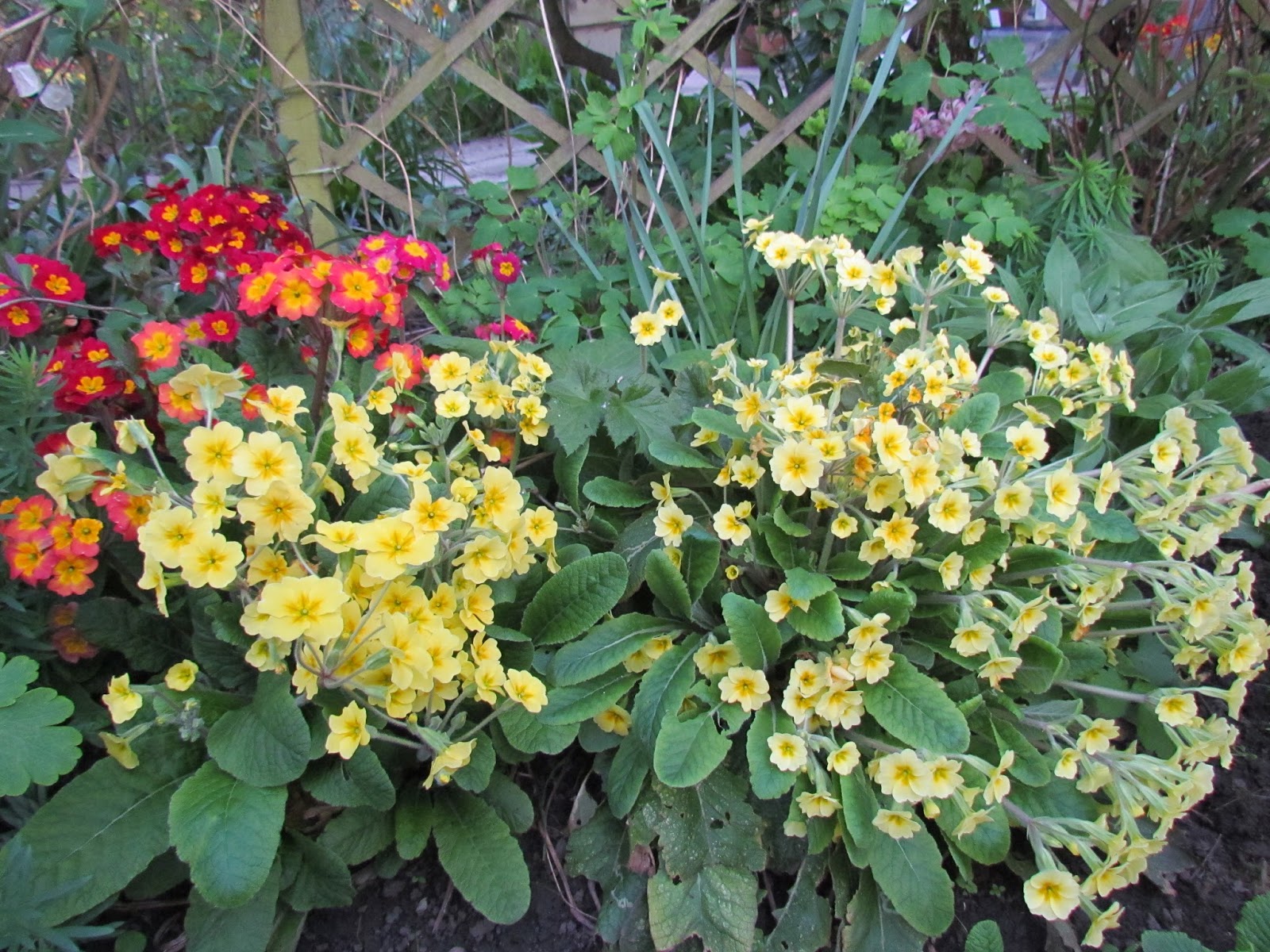
Primroses are early bloomers hence the name - Prima Rosa - first flower. There are 400 - 500 members of the Primulaceae genus.  Market stalls are full of these hardy perennials this week ... cheerful instant colour for pots or borders. If you are planting some take a good look at the flowers.  There are two kinds of primulas - the pin eye form where the style is above the stamens (look at the centre of the blue ones above - the pin is clearly sticking out) and the thrum eye form where the style is below the stamens.  If you want them to spread then the best seed is formed when cross pollination occurs between the two different kinds so make sure you position a pin eyed plant near a thrum eyed plant.  Collect the seeds in June or July and sow them immediately (Monty shows you how here) or leave them to self seed.


Now is the time to be sowing the seeds for next year's plants.  Soak your pots of compost by standing them in water before sowing the tiny seeds on top.  Do not cover the seeds as they need plenty of light to germinate.  Place a pane of glass over the top or put them inside a plastic bag to retain moisture then leave then in a warm light place.  They can be slow so be patient!   Transplant the seedlings into individual pots when they are 5 cm tall. They will be ready to bloom next spring. 


Alternatively you can increase your stock by taking  root cuttings (winter, when the plant is dormant, is the best time for this) or now, by removing a leaf with an incipient bud and growing it on - click here for the instructions from the Primula World site.

Dead head regularly to prolong flowering and divide every three years (after flowering) to encourage healthy growth.


The root and flowers have been used in many cultures to relieve bronchial problems, sleeplessness and stress.
Richard Earlom - Thornton Auricula
 I tend to take these plants for granted.  I realise a lot of time and effort has gone into producing the different colours and varieties but I didn't realise that primula plant hunters had actually died! Here is a short extract about plant hunters from the National Auticula and Primula Society website
When China first opened its doors particularly after the Opium war of 1860 French missionaries were quick to take advantage, although a few had gained acceptance earlier because of their scientific knowledge: this newly found freedom of movement was always relative and precarious and some were murdered. Abbe Soulie, who discovered Primula polyneura and is commemorated by Primula soulei was caught by the monks of Petang during this period of Chinese/Tibetan friction, tortured and finally shot. His colleague Bourdonnec was killed some months later together with his successor. Pere Dubernard (Primula dubernardiana), who had been of help to Forrest, was murdered during the same period, and Forrest himself, who was in the vicinity, had to flee leaving all his equipment and belongings. He was hunted remorselessly before finally making his escape.
... a host of golden ... cowslips!

Wednesday, 23 January 2013

What NOT to do in January 1840


"Never under any circumstances give a plant in a pot a very little dose of water because the weather happens to be dull and the plant not thoroughly dry. The true rule for watering pot plants is to wait till they are really dry, really in want of it, and then give them a thorough dose, by filling up the pot to the brim, and repeating the operation when the first dose has sunk.

Never water a plant in a pot from the sides of which the earth has shrunk away, leaving a crack all round. The earth should be firmly pressed down with the thumb or with a blunt stick; that once done, the water will sink equally through the ball instead of quickly passing down the sides, leaving the ball and most of the roots dry."          The Amateur Gardener's Calendar by Jane Loudon (1840)


"Never move soils or manures, or barrows or carts with any heavy load over the soft surface of a garden while you have an opportunity of doing it when the ground is frozen hard, as it may be done so much easier in the latter case."


"Avoid as far as possible digging when the soil is saturated with water."


In the Greenhouse

"Never wait for the presence of more than half a dozen specimens of aphis to be assured that fumigation is required."


"Never waste valuable space on the stages, pits or benches of houses by keeping on them dormant fuchsias, bulbs, subtropical plants etc. which will be quite as well stowed under the said benches or stages, or in any dark place perfectly free from frost.

Never commence any forcing of fruits, or plants, or indeed any important stage of cultivation in a plant house of any kind without having previously thoroughly cleansed every surface."


Jane Loudon (1807 - 1858)

 It all sounds very sensible and familiar and I particularly like the one about not digging! We have hundreds of books, magazines, TV programmes, websites and blogs all telling us what to do (or not do) in January, February, March ....  It's difficult for us to imagine a time when such advice was not freely available.  Jane Loudon changed all that.

Her husband, John C Loudon, was an eminent horticulturalist who had published numerous works on gardening.  Before her marriage she knew nothing about botany but she worked with him and learnt how to plant and propagate in his meticulous manner.  They were regarded as the leading horticulturalists of their day - the Victorian equivalents of  Mony Don and Sarah Raven.  Charles Dickens and William Makepeace Thackery were counted as friends.

Jane realised that the garden manuals of the day were not written with amateurs in mind: they were aimed at people with some experience and knowledge so didn't go back to basics.  'Instructions in Gardening for Ladies'  was published in 1840 and went on to sell over 200,000 copies.  It is still in print today. 

She published a number of gardening books  which are now collectors' items.  One is up for sale in New York at $19500 (over £12,000).  I've searched the attic but we must have thrown our copy away.

Alternatively, you can read them for free here!

The most expensive books contain her beautiful art.

You can see an exhibition of her work at the Victoria and Albert Museum or just read a little more about her life (she was a real Victorian heroine) by clicking here.


Using the word 'horticulture' made me think of another female I admire ... Dorothy Parker   (1893 -1967).
As a panelist on a radio show she was asked to use the word 'horticultural' in a sentence.  Quick as a flash she replied, "You can lead a whore to culture but you cannot make her think!"